
The Hidden Costs of Self-Managing Your Real Estate Investments
Time as Your Most Valuable Asset: What Self-Management Really Costs
When calculating the returns on your real estate investments, the spreadsheets rarely account for your most precious resource—time. According to a National Association of Realtors landlord survey, the average property owner spends 4.5 hours per week managing a single rental property. With three properties, that quickly jumps to 14+ hours weekly.
What could you do with those 60+ hours a month? For high-earning professionals, the math becomes striking. If your time is worth $100/hour in your primary career, self-management costs you $6,000 monthly in opportunity cost.

That’s before factoring in middle-of-the-night emergency calls or weekend property showings.
Beyond financial calculations, the stress toll deserves serious consideration. Property management brings unpredictable challenges—tenant conflicts, surprise maintenance issues, and ever-changing regulations. This chronic stress affects sleep quality, decision-making abilities, and even long-term health outcomes. Many investors report making poorer investment decisions when overwhelmed by management responsibilities, potentially costing far more than a management fee ever would.
When DIY Property Management Threatens Your Turnkey Real Estate Strategy
The appeal of turnkey real estate investments lies in their promise of minimal involvement with maximum returns. Yet self-management fundamentally contradicts this approach. As your portfolio grows beyond 2-3 properties, management demands create a ceiling on expansion. You simply run out of bandwidth to evaluate new opportunities when tenant complaints consume your attention.
Maintenance decisions often suffer when owners are stretched thin. According to BiggerPockets research, self-managed properties typically experience 15-20% higher deferred maintenance costs over five years compared to professionally managed properties. This neglect dramatically impacts both property values and tenant satisfaction. Properties with responsive maintenance enjoy 23% better tenant retention rates and command 4-7% higher rents.
Legal missteps represent another hidden danger. Fair housing violations, security deposit mishandling, or improper eviction procedures can cost tens of thousands in penalties and legal fees. These risks multiply with each property added to your portfolio.
Scale Problems: Why Management Complexity Grows Exponentially, Not Linearly
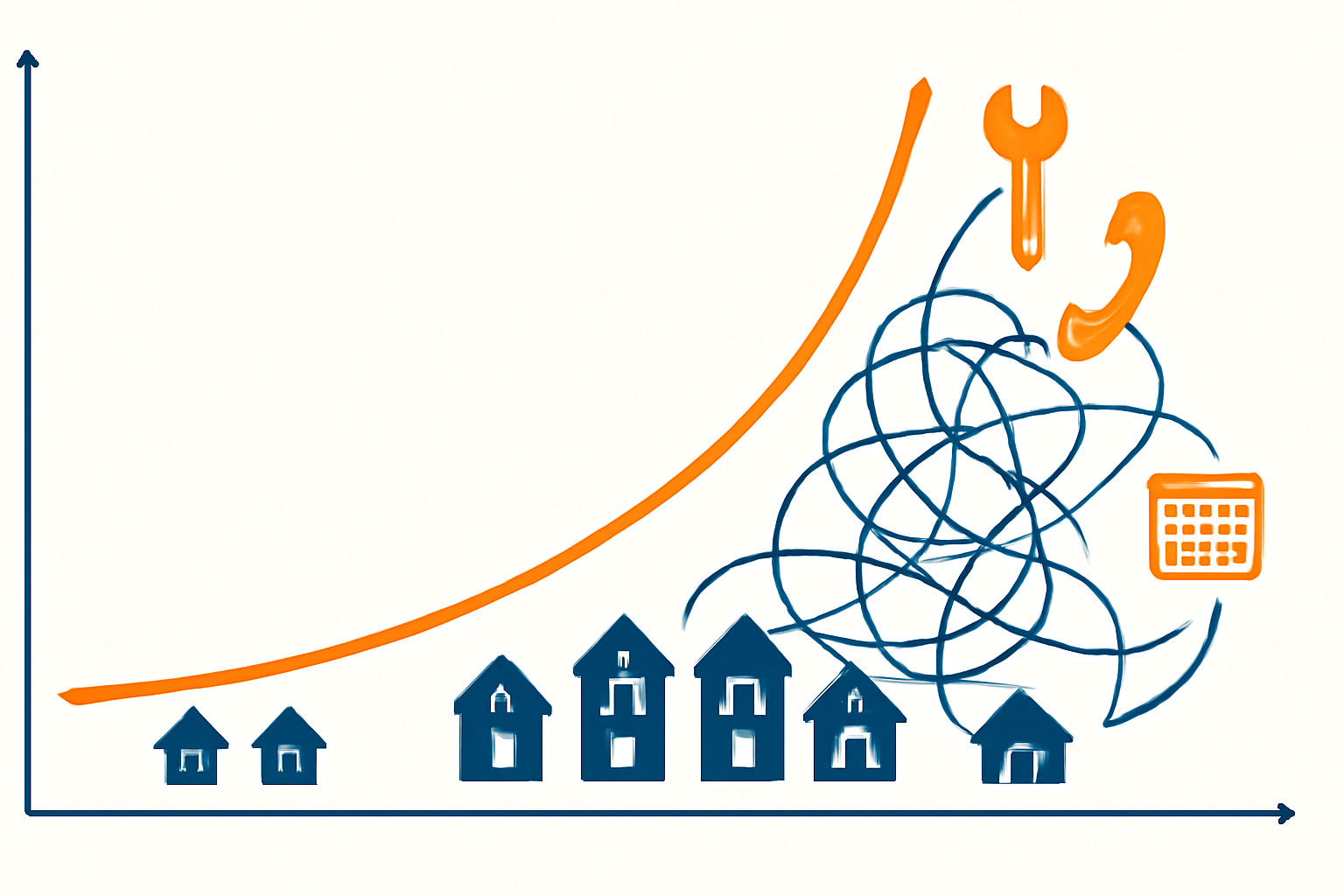
Adding one property to your portfolio doesn’t add one unit of management work—it might add three. Property Management Institute data shows coordination complexity increases exponentially between 4-10 properties.
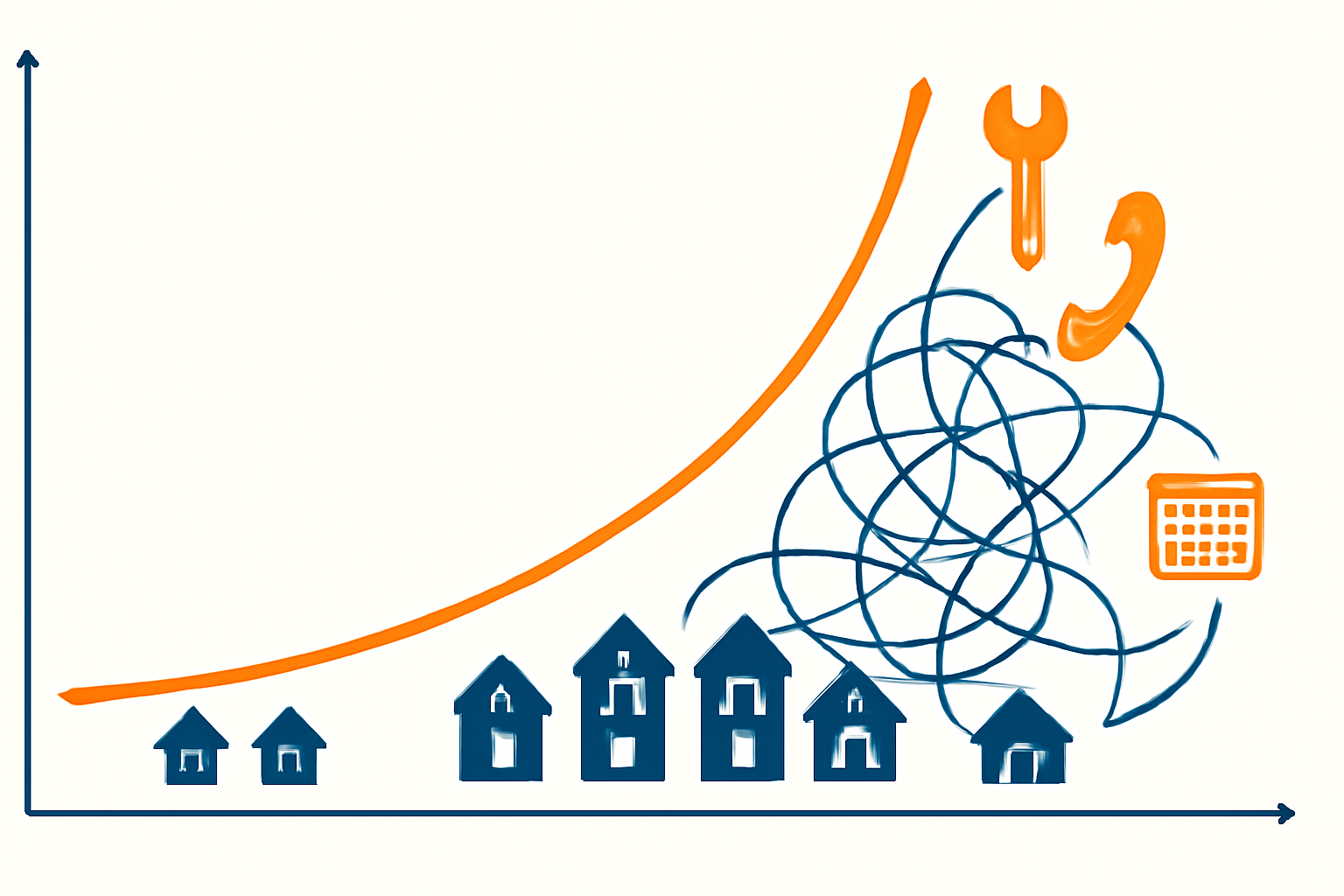
With five properties, you’re juggling relationships with multiple plumbers, electricians, and contractors across different locations, each with unique needs.
Administrative tasks compound similarly. Five properties mean five lease anniversaries, five tax situations, five insurance policies, and potentially dozens of tenant interactions monthly. Software helps, but ultimately someone must oversee these systems.
Tenant issues demonstrate this non-linear growth perfectly. One difficult tenant might consume 80% of your management time for one month. With ten units, the probability of simultaneously having multiple high-maintenance tenants increases dramatically, creating management storms that can overwhelm even experienced investors.
Building Generational Wealth Requires Systems, Not Heroics
Creating lasting generational wealth through real estate isn’t about heroic personal effort—it’s about building sustainable systems that operate without your daily involvement. Forbes real estate experts consistently identify systematic management as the key differentiator between small-time landlords and those who build significant multigenerational portfolios.
Self-management becomes increasingly impractical as portfolios grow beyond 10 units. The skills needed to identify excellent investment opportunities differ fundamentally from those required for effective property management. By attempting both, most investors perform neither optimally.
Professional management represents more than convenience—it’s a wealth preservation strategy. Properties professionally managed over decades maintain better condition, experience fewer catastrophic expenses, and provide more predictable income streams that can truly support generational wealth transfer.