
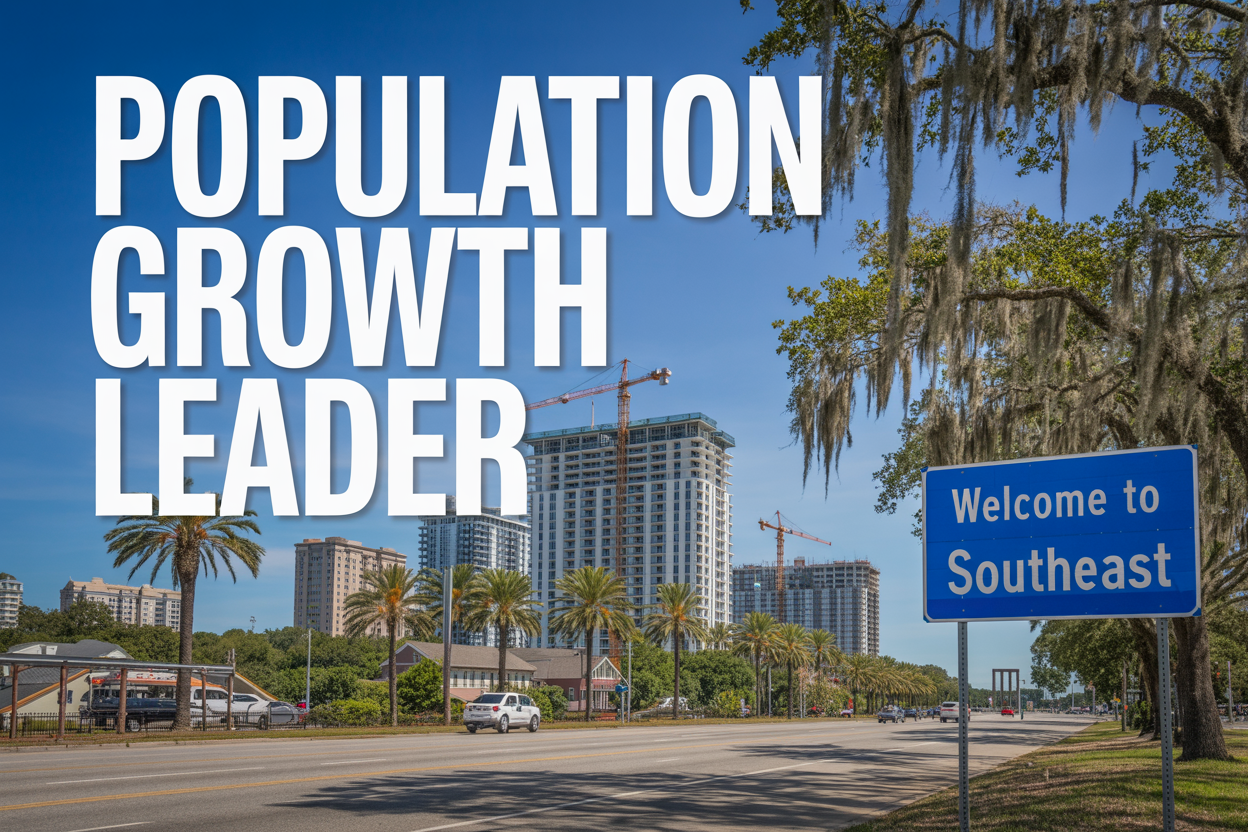
“Why the Southeast is Leading the Nation in Population Growth and Rental Demand” (Florida Gulf Coast, Alabama, Arkansas)

The Southeast is experiencing unprecedented population growth and rental demand, with Florida’s Gulf Coast, Alabama, and Arkansas leading the charge as America’s hottest migration destinations. Real estate investors, property managers, and anyone considering relocation to these booming markets need to understand what’s driving this massive shift.
This surge isn’t happening by accident. The region offers a powerful combination of economic opportunities, affordable living costs, and year-round sunshine that’s pulling millions of Americans southward. Cities like Mobile, Little Rock, and Naples are seeing rental vacancy rates plummet while property values climb.
We’ll explore the economic factors driving Southeast population migration, from job growth to business-friendly policies that are attracting both individuals and major corporations. You’ll also discover how climate advantages and lifestyle benefits are making these states irresistible to families and retirees alike. Finally, we’ll break down the housing market dynamics creating exceptional rental opportunities and why smart investors are focusing their attention on this rapidly growing region.
Economic Drivers Fueling Southeast Population Migration
Lower Cost of Living Attracts Families and Young Professionals
The Southeast’s affordability advantage draws people like a magnet. Housing costs in Alabama and Arkansas remain 30-40% below national averages, while Florida’s Gulf Coast offers beachfront living at prices that would buy a studio apartment in major metropolitan areas. Young professionals starting their careers can actually afford to buy homes, not just dream about them. Families stretch their dollars further, with everyday expenses like groceries, utilities, and childcare costing significantly less than coastal cities.
This cost differential creates real wealth-building opportunities. A software developer earning $75,000 in Birmingham lives like someone making $110,000 in San Francisco. The purchasing power boost means more disposable income for savings, investments, and lifestyle improvements. Retirees discover their fixed incomes go much further, allowing comfortable retirement lifestyles previously out of reach.
Business-Friendly Tax Policies Create Job Opportunities
Southern states roll out the red carpet for businesses with competitive tax structures. Florida’s lack of state income tax immediately increases take-home pay for workers. Alabama and Arkansas offer generous corporate tax incentives, reduced regulatory burdens, and streamlined permitting processes that make business operations smoother and more profitable.
These policies create a snowball effect. Lower business costs mean companies can hire more employees, pay competitive wages, and invest in expansion. Small businesses thrive in environments where startup costs remain manageable and ongoing operational expenses stay low. Entrepreneurs find it easier to take risks and grow their ventures when government policies support rather than hinder business development.
Major Corporate Relocations Bring High-Paying Employment
Fortune 500 companies are making permanent moves south, bringing thousands of well-paying jobs with them. Boeing’s aerospace operations in Alabama employ thousands of engineers and technicians. Walmart’s continued expansion in Arkansas creates opportunities across logistics, technology, and corporate functions. Florida’s Gulf Coast attracts financial services companies seeking lower operational costs while maintaining access to talented workforces.
These relocations create ripple effects throughout local economies. Each corporate job typically supports 2-3 additional service sector positions. Local businesses benefit from increased consumer spending, creating a virtuous cycle of economic growth. The arrival of major employers also elevates the entire regional job market, as companies compete for talent by offering better compensation packages.
Growing Tech and Healthcare Sectors Expand Career Prospects
The Southeast is shedding its traditional economic image, emerging as a hub for innovation-driven industries. Tech companies find the region’s combination of lower costs, quality talent, and improving infrastructure irresistible. Cities like Huntsville, Alabama, have become aerospace and defense technology centers, while Florida’s Gulf Coast attracts fintech and software development companies.
Healthcare expansion follows population growth, creating sustainable job opportunities. Aging baby boomers relocating to warmer climates drive demand for medical services, hospitals, and specialized care facilities. This creates employment opportunities for healthcare professionals, from nurses and technicians to administrators and support staff. The sector’s recession-resistant nature provides economic stability that many regions lack.
Climate and Lifestyle Benefits Drawing New Residents

Year-round warm weather eliminates harsh winters
The Southeast’s temperate climate stands as one of its most compelling attractions for people fleeing colder regions. Average winter temperatures in Florida hover around 70°F, while Alabama and Arkansas rarely see extended periods below freezing. This dramatic difference means residents can enjoy outdoor activities twelve months a year without the seasonal hibernation that defines life in northern states.
Consider the financial impact alone: heating bills that can reach $300-400 monthly in northern climates drop to minimal amounts in the Southeast. Air conditioning costs during summer months often prove less expensive than heating costs in regions with brutal winters. Homeowners save thousands annually on energy expenses while enjoying a climate that supports year-round gardening, outdoor dining, and recreational activities.
The psychological benefits are equally significant. Seasonal Affective Disorder affects millions of Americans in northern states, but the Southeast’s abundant sunshine provides natural mood elevation and vitamin D production. People report feeling more energetic and motivated when they don’t face months of gray skies and limited daylight hours.
Coastal access provides recreational and investment opportunities
The Southeast boasts over 1,000 miles of pristine coastline along the Gulf of Mexico and Atlantic Ocean. Florida’s Gulf Coast alone offers world-class beaches, deep-sea fishing, boating, and water sports that attract millions of visitors annually. This coastal proximity creates dual benefits: exceptional quality of life for residents and robust rental income potential for property investors.
Beach communities like Gulf Shores, Alabama, and Pensacola, Florida, experience rental occupancy rates exceeding 75% during peak seasons. Short-term vacation rentals generate $150-300 per night, while long-term rentals command premium rates due to coastal desirability. Properties within walking distance of beaches often appreciate 20-30% faster than inland alternatives.
The marine industry also creates substantial economic opportunities. Boat manufacturing, marina services, fishing charters, and marine construction provide diverse employment options. Coastal areas attract retirees with disposable income who invest in recreational properties and services, creating a multiplier effect that benefits the entire regional economy.
Outdoor lifestyle supports health and wellness trends
The Southeast’s climate enables an active outdoor lifestyle that aligns perfectly with America’s growing focus on health and wellness. Residents can hike, bike, swim, and participate in outdoor sports throughout the year without seasonal interruptions. State parks, nature preserves, and recreational trails provide endless opportunities for physical activity and stress relief.
This outdoor accessibility attracts health-conscious professionals, active retirees, and families prioritizing wellness over urban convenience. Communities with extensive trail systems, golf courses, and outdoor recreation facilities command higher rental rates and experience stronger demand. Properties near state parks or recreational areas often see 15-25% rental premiums compared to similar properties without these amenities.
The wellness trend has created entire communities designed around active living. Master-planned developments featuring walking trails, fitness centers, and outdoor gathering spaces attract residents willing to pay premium rents for lifestyle amenities. This demand pattern creates excellent opportunities for rental property investors who understand the connection between outdoor recreation access and rental income potential.+ Add Section
Housing Market Dynamics Creating Rental Opportunities
Home prices remain affordable compared to national averages
The Southeast continues to offer a compelling value proposition for both buyers and investors, with median home prices sitting significantly below national benchmarks. In markets like Mobile, Alabama, the median home price hovers around $180,000, while similar properties in coastal California or the Northeast command prices exceeding $500,000. This affordability gap creates a natural migration pattern as remote workers and retirees discover they can stretch their dollars much further in places like Pensacola, Florida, or Little Rock, Arkansas.
The price differential becomes even more pronounced when considering property taxes and the overall cost of living. A $300,000 home in Birmingham, Alabama, carries annual property taxes of roughly $600, compared to $9,000 for a similar property in New Jersey. These savings translate directly into rental market opportunities, as property investors can achieve positive cash flow more easily while keeping rents competitive for tenants.
New construction struggles to meet growing demand
Construction activity across the Southeast faces significant headwinds despite robust demand signals. Supply chain disruptions, skilled labor shortages, and rising material costs have created a perfect storm limiting new housing development. Many builders report lead times of 8-12 months for new homes, compared to 4-6 months just three years ago.
The mismatch between supply and demand shows up clearly in building permit data. Cities like Fort Myers, Florida, saw population growth of 15% between 2020-2023, yet building permits increased by only 8% during the same period. This construction deficit forces more residents into rental housing while they wait for homeownership opportunities or simply choose the flexibility that renting provides.
Local zoning regulations and environmental review processes add another layer of complexity. Coastal areas must navigate flood zone requirements and environmental impact studies, while inland markets deal with aging infrastructure that requires upgrades before major developments can proceed.
First-time buyers face competitive purchasing conditions
The combination of interstate migration and limited inventory has created bidding wars even in traditionally affordable markets. First-time buyers often find themselves competing against cash offers from investors or relocated professionals bringing equity from higher-priced markets. Properties regularly sell within days of listing, frequently above asking price.
Young professionals and families increasingly turn to rental housing as a stepping stone, planning to rent for 2-3 years while saving for larger down payments and waiting for market conditions to stabilize. This trend directly benefits rental property investors, as these households typically seek longer-term leases and maintain properties well.
Credit requirements and debt-to-income ratios have tightened, making homeownership less accessible even when buyers can afford monthly payments. Many potential homeowners discover that renting allows them to live in desirable neighborhoods while building credit and savings.
Corporate relocations increase temporary housing needs
Major corporations expanding Southeast operations create substantial demand for flexible housing solutions. Companies like Amazon, Tesla, and various aerospace manufacturers bring hundreds of employees who need housing before permanent relocation decisions are finalized. These corporate relocations often include housing allowances, making quality rental properties highly sought after.
Executive housing represents a particularly lucrative niche, as companies pay premium rents for furnished properties in good school districts. Medium-term rentals (3-12 months) command higher monthly rates than traditional annual leases while offering less turnover than short-term vacation rentals.
The trend extends beyond individual relocations to entire departments or divisions establishing regional offices. This creates clusters of housing demand that can support multiple investment properties in specific submarkets, providing portfolio diversification opportunities for serious investors.+ Add Section
Infrastructure Development Supporting Population Growth

Transportation improvements enhance connectivity and accessibility
Major interstate expansions and new highway projects are transforming how people move throughout the Southeast. The I-65 corridor improvements through Alabama have cut travel times between major cities, while Florida’s extensive highway modernization projects connect Gulf Coast communities to employment centers more efficiently. These transportation upgrades make previously remote areas suddenly attractive for both residents and businesses.
Airport expansions tell a similar story. Regional airports in cities like Mobile, Pensacola, and Little Rock have added new routes and upgraded facilities, making these markets more accessible to both tourists and relocating professionals. The improved connectivity means residents can maintain business relationships with other regions while enjoying lower living costs.
Public transit initiatives are also gaining momentum. Alabama’s investment in regional bus systems and Florida’s coastal trolley expansions provide car-free options that appeal to younger demographics. These improvements reduce the barrier to entry for renters who don’t want the expense of vehicle ownership in their new location.
The ripple effects extend beyond convenience. Better transportation infrastructure attracts employers who need reliable logistics networks. Manufacturing facilities, distribution centers, and service companies are choosing Southeast locations specifically because workers and goods can move efficiently. This creates a positive feedback loop where improved infrastructure draws businesses, which then attract more residents seeking employment opportunities.
Educational institutions attract students and faculty
Universities across the Southeast are experiencing unprecedented enrollment growth, creating sustained rental demand from both students and academic professionals. The University of Alabama has expanded its campus footprint significantly, while Auburn University continues breaking enrollment records. These institutions don’t just house students – they create entire ecosystems of graduate students, postdocs, visiting researchers, and faculty who need flexible rental arrangements.
The academic calendar creates unique rental market dynamics. Student housing maintains consistent demand, but faculty and staff rentals often involve longer-term commitments. Visiting professors and researchers on sabbatical create demand for furnished, short-term rentals. International students and scholars need housing that accommodates their specific needs and timeline constraints.
Research partnerships between universities and private companies are bringing more high-skilled professionals to the region. When aerospace companies collaborate with Auburn or tech firms partner with Florida universities, they often relocate teams temporarily or permanently, creating demand for quality rental properties near campus areas.
Healthcare facility expansions serve aging populations
The Southeast’s appeal to retirees is driving massive healthcare infrastructure investments, which in turn support population growth across all age groups. Major hospital systems are building new facilities and expanding existing ones throughout Florida’s Gulf Coast, Alabama, and Arkansas. These projects create thousands of construction jobs initially, followed by permanent positions for healthcare workers who need nearby housing.
Specialized medical centers are emerging as regional draws. Alabama’s cardiovascular institutes, Florida’s cancer treatment centers, and Arkansas’s orthopedic facilities attract patients from across the region. Many patients relocate temporarily or permanently for treatment, creating demand for short-term and extended-stay rentals. Family members often follow, needing their own housing solutions.
The healthcare worker shortage nationwide means these new facilities must recruit aggressively, often targeting younger professionals from other regions. Travel nurses, medical residents, and specialist physicians frequently rent while establishing themselves in new communities. Their income levels support higher-end rental properties, improving the overall rental market quality.
Senior living communities represent another growth sector. Independent living facilities, assisted living centers, and continuing care communities are expanding rapidly. While seniors may not rent traditional apartments, the staff supporting these facilities – from nurses to maintenance workers – create substantial rental demand in surrounding areas.+ Add Section
Investment Potential in Southeast Rental Markets

High Occupancy Rates Deliver Consistent Rental Income
Southeast rental markets are experiencing unprecedented demand, with occupancy rates consistently outperforming national benchmarks. Florida Gulf Coast markets like Tampa and Fort Myers regularly maintain occupancy rates above 95%, while Alabama cities such as Huntsville and Birmingham hover around 92-94%. Arkansas markets, particularly Little Rock and Bentonville, showcase similar strength with rates exceeding 90%.
The driving force behind these impressive numbers stems from continuous population inflow combined with limited housing supply. New residents arriving from high-cost states often rent initially while exploring neighborhoods and establishing local employment. This creates a steady pipeline of quality tenants willing to pay premium rents for desirable properties.
Seasonal dynamics in coastal areas provide additional income streams. Properties in Gulf Coast regions benefit from both long-term residents and short-term vacation rentals during peak tourist seasons. This dual-market approach allows investors to maximize revenue throughout the year while maintaining stable occupancy.
Property Appreciation Outpaces National Averages
Real estate values across the Southeast have demonstrated remarkable growth trajectories that significantly exceed national appreciation rates. Over the past five years, Florida Gulf Coast properties have appreciated an average of 8-12% annually, compared to the national average of 5-6%. Alabama markets have seen similar gains, with Birmingham and Mobile experiencing 7-9% annual appreciation.
Arkansas presents particularly compelling opportunities, with markets like Northwest Arkansas around Bentonville recording 10-15% annual growth due to corporate expansions and population influx. These appreciation rates create substantial equity building for rental property investors while generating strong cash flow.
The appreciation potential stems from multiple factors: limited developable land in coastal areas, growing job markets attracting high-income professionals, and infrastructure improvements increasing property values. Unlike speculative bubbles, this growth reflects genuine economic fundamentals and demographic shifts.
Diverse Tenant Demographics Reduce Vacancy Risks
Southeast rental markets benefit from remarkably diverse tenant pools that minimize vacancy risks and provide income stability. The demographic mix includes young professionals relocating for career opportunities, retirees seeking affordable living with favorable climates, and growing families attracted to quality schools and community amenities.
Professional tenants dominate markets near major employers like aerospace companies in Alabama, tech firms in Arkansas, and healthcare systems throughout Florida. These tenants typically maintain longer lease terms and demonstrate strong payment histories. Retiree tenants, particularly prevalent in Florida Gulf Coast areas, often seek multi-year arrangements and prioritize property maintenance.
Military personnel stationed at bases throughout the region provide additional tenant stability. Their housing allowances ensure consistent rent payments, while deployment cycles create predictable turnover patterns that allow for strategic rent adjustments and property improvements.
The economic diversity across these states creates natural hedges against industry-specific downturns. When one sector experiences challenges, other industries continue driving rental demand, maintaining market stability and investor confidence.+ Add Section
Conclusion
The Southeast’s population boom isn’t just a temporary trend – it’s reshaping America’s demographic landscape. States like Florida, Alabama, and Arkansas have cracked the code on what people really want: affordable living, year-round sunshine, growing job markets, and communities that feel like home. When you combine lower taxes, business-friendly policies, and infrastructure investments with the appeal of coastal living and mild winters, you get a perfect storm for sustained growth.
For investors and property managers, this represents one of the most compelling rental market opportunities in decades. The numbers don’t lie – people are moving to the Southeast faster than housing can keep up, creating strong rental demand that’s likely to persist for years. Smart investors are already positioning themselves in these markets, recognizing that population growth this consistent rarely comes around. If you’re looking to diversify your portfolio or enter the rental market, the Southeast offers the kind of fundamentals that make real estate fortunes.